


The Mobile Bartending Website Structure Blueprint Guide: Build And Optimize Every Page You Need To Rank And Convert
Most mobile bartending websites were built to look good not to rank on Google or book events. This is the complete page-by-page architecture guide that changes that.
Most mobile bartending websites were built to look good at a launch party. A few photos, a contact form, a vague services page, and a logo. Then nothing. No new pages, no content strategy, no thought given to whether Google can actually understand what the business does or who it serves. The result is a website that exists but does not work while enquiries go to competitors who built their sites more deliberately.
This guide gives you the complete blueprint. Every page your mobile bartending website needs, what each one must contain to rank on Google, and how to structure your site so that every visitor who arrives from a search already has a reason to get in touch.
Section 01 Why Your Website Is The Most Important SEO Asset Your Mobile Bar Owns
Your Google Business Profile gets people interested. Your website gets them to convert into booking.
A well-optimised Google Business Profile can get your mobile bar in front of people searching locally. But when a potential client clicks through to your website, the website has to do the closing. If it takes more than three seconds to load, if it is confusing to navigate, if it does not answer the questions that a wedding couple or a corporate event manager is actually asking they leave. They go back to Google. They click on a competitor.
Google tracks this behaviour. Pages that receive high bounce rates and short dwell times signal to Google that the content did not satisfy the searcher's intent. Over time, that pattern pushes your rankings down. A website that converts visitors into enquiries also retains them and retention is one of the most powerful organic ranking signals that most mobile bar owners have never heard of.
Your Website Is Your Content Platform And Content Is How You Own More Of Google
A Google Business Profile can only do so much. It ranks you for location-based searches. It cannot rank you for "how many bartenders do I need for a wedding of 150 guests" or "what is a good cocktail menu for a corporate event." Those searches are captured by web pages specifically by blog posts, service pages, and FAQ sections that answer the exact questions your potential clients are typing into Google.
A mobile bartending business that publishes genuinely useful content builds what SEO practitioners call topical authority. Google begins to recognise the site as a trusted source on mobile bartending topics and that recognition translates into rankings across dozens or hundreds of search terms, not just the two or three you explicitly targeted. For more on how this works end-to-end, see our complete guide on how mobile bartenders get found on Google and book more events without paid advertising.
What makes a mobile bartending website 'built for SEO' versus just built
The difference is intent. A website built for mobile bartending SEO starts with questions: who is searching for mobile bartending services, what are they searching for, what do they need to see to feel confident enough to make an enquiry, and what does Google need to see to understand what the page is about? The answers to those questions shape every decision the pages you create, the words you use, the presence of schema markup, and the speed at which everything loads.
£45,000 in Inbound Conversions in 4 Months Through Organic Visibility Alone
A mobile bartending client came to Rankvi with a website that was generating zero organic enquiries. We rebuilt their page architecture following this exact blueprint — event-type pages, optimised homepage, schema markup, citation strategy, and a 12-article content plan. Within four months, organic search was driving consistent high-value inbound enquiries, producing £45,000 in confirmed bookings from clients who found them through Google with zero paid advertising involved.
Section 02 Homepage — Your City And Service First, Everything Else Second
What should the homepage of a mobile bartending website say?
Above the fold, your homepage must communicate four things: who you are, what you do, where you do it, and what the visitor should do next. This means: a headline with your primary service and city, a one-sentence description mentioning your event types, a single prominent CTA (Get a Quote, Check Availability, or Book a Call), and a real event photograph — not stock photography. Your homepage is not a welcome mat. It is a conversion page for people who have already decided they want a mobile bar.
Below the fold, your homepage should include your key event types linking to their dedicated pages, three to five real client testimonials with event types and locations mentioned, your service area, trust indicators (years of experience, events completed, insurance and licensing status), and a secondary call to action near the bottom.
Primary keyword in H1 · City/region in first 100 words · Meta title under 60 characters · Meta description 140–155 characters with a clear benefit · Internal link to every core service page · LocalBusiness + WebPage schema markup
Section 03 Individual Event-Type Service Pages — The Most Important Structural Decision Your Website Makes
Does a mobile bartending website need separate pages for each event type?
Yes, without exception. A wedding couple searching "mobile bar hire for wedding" has completely different questions and expectations than a corporate events manager searching "mobile bartender for product launch." Google knows this. A single generic services page cannot rank for both searches because neither searcher's intent is fully satisfied. Each event type you serve needs its own dedicated page, its own keyword target, and its own client-specific content.
A dedicated wedding bartending page that covers signature cocktail menus, how many bartenders per guest, wedding venue restrictions, and personalisation options will outrank a generic services page for wedding searches every single time. The same logic applies to every event type you serve.
| Event-type page | Primary target keyword |
|---|---|
| Wedding mobile bar | mobile bar hire for wedding / wedding bartender [city] |
| Corporate event bartending | corporate event bartender / mobile bar corporate event [city] |
| Private party mobile bar | mobile bartender for private party / hire bartender birthday party |
| Festival and outdoor events | mobile bar hire festival / outdoor event bartender |
| Hen and stag parties | mobile bartender hen party / cocktail bar hen do [city] |
| Charity and community events | mobile bar hire charity event / bartender community event |
What does each event-type service page need to include?
Each page should be a minimum of 700 words and cover the following elements:
- An opening section that speaks directly to the client type — their event, their concerns, their vision
- A description of your specific service offering for that event type
- Pricing guidance — even a "starting from" figure reduces friction and pre-qualifies leads
- An FAQ section answering the five or six most common questions from that type of client
- Two or three testimonials from clients who booked for that specific event type
- A clear call to action with your booking or enquiry mechanism
- Internal links to your homepage, your about page, and at least one related blog post
Including pricing information — even a starting price range — satisfies a high-intent search query. "How much does a mobile bartender cost for a wedding" is one of the most searched questions in this niche. If your service page answers it, that page becomes eligible to rank for that query and to appear in Google's AI Overviews. Hiding pricing sends high-intent visitors away to find a competitor who will tell them.
Section 04 About Page — Where E-E-A-T Gets Built And Clients Decide To Trust You
What does the About page need to include for mobile bartending SEO?
Google's quality guidelines use the concept of E-E-A-T — Experience, Expertise, Authoritativeness, and Trustworthiness — to evaluate whether content and businesses are reliable. For a mobile bartending business, E-E-A-T is built through the About page more than any other single page on the site.
Your About page should tell the story of your business: how you started, what drove you to specialise in mobile bartending, how many events you have worked, what training or certifications you hold, and what makes your approach to service different from every other mobile bar in your area. This is not a CV it is a story that builds confidence.
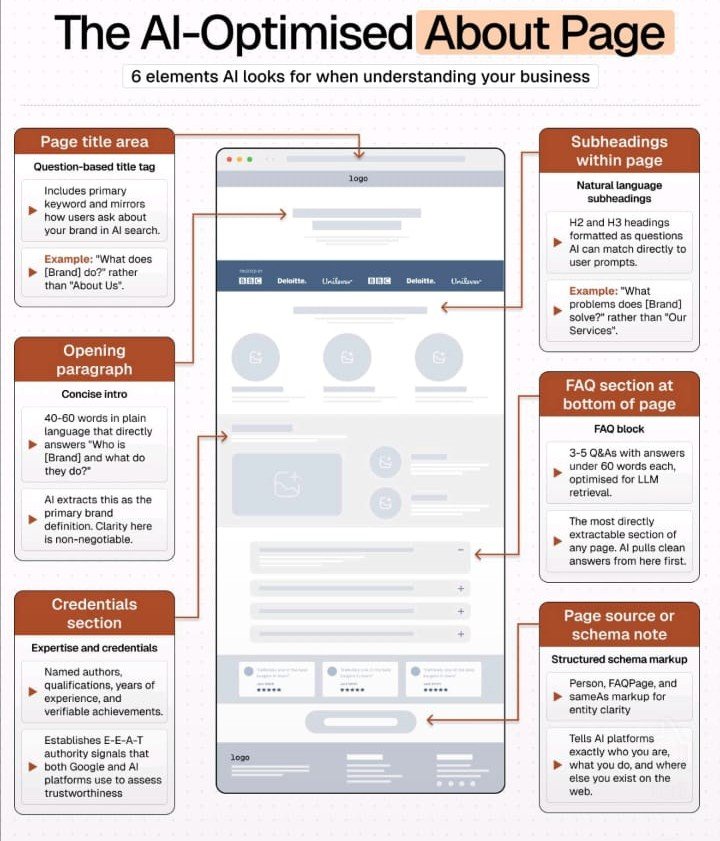
Specific elements that strengthen E-E-A-T on an About page:
- Named team members with real photographs — not a faceless business entity
- Years of experience and approximate number of events completed
- Any formal bartending qualifications, licensing, or certifications
- Insurance details — public liability insurance signals professionalism and protects clients
- Named clients or event types you have worked with (with permission where relevant)
- A personal story or founding narrative that explains your passion for the craft
- Any media coverage, features, or awards
The About page is also a strong candidate for adding Person schema and Organization schema structured data that tells Google exactly who is behind the business, building the entity recognition that helps your entire site rank better for local searches.
Section 05 Gallery Or Portfolio Page — Your Visual Trust Engine And A Ranking Asset
Event photography is the most powerful conversion tool a mobile bartending website has. Before a client reaches out, they want to see your bar in action the quality of your setup, the range of events you have worked, and whether your aesthetic matches what they have in mind for their event. A gallery or portfolio page delivers all of this.
From an SEO perspective, your gallery page is also an opportunity to capture image search traffic — a significant but often overlooked source of event industry leads. Every photo on your site should have a descriptive file name (mobile-bar-setup-outdoor-wedding-manchester.jpg, not IMG_4823.jpg) and an alt text that describes the event type, setup, and location.
File name: descriptive, hyphenated, includes event type and location · Alt text: 100–125 characters describing what is in the image · File size: compressed to under 150KB, ideally in WebP format · Captions: optional but useful Google reads caption text as content context · No stock photography on your main portfolio page Google can detect it and it undermines E-E-A-T
Section 06 Contact or Booking Page — The Page That Either Completes A Booking Or Loses It
The contact page is where visitors either become leads or disappear. Most mobile bartending websites treat this page as an afterthought a basic form buried at the bottom of the navigation with no context and no encouragement. That is a booking pipeline with a hole in it.
A high-converting contact page for a mobile bartending business includes:
- A short, reassuring headline "Let us know about your event and we will get back to you within 24 hours"
- A form that collects the minimum information needed: name, email, phone, event type, event date, estimated guest numbers, and any specific requirements
- Your response time commitment — set expectations so enquiries feel valued
- Your direct phone number and email address as alternatives to the form
- A brief FAQ addressing the most common pre-booking concerns: do you supply alcohol, what is your service area, what is your cancellation policy
- Trust signals near the form: a testimonial, a star rating, a number of events completed
From an SEO perspective, your contact page should target keywords like "book mobile bartender [city]" and "hire mobile bar [city]" the bottom-of-funnel searches that indicate someone is ready to take action.
Section 07 Blog — The Content Layer That Builds Authority And Captures Long-Tail Traffic
Should a mobile bartending website have a blog?
Yes, without question. The blog is the single most powerful long-term SEO asset your website can have not because blogging is inherently good for SEO, but because a well-structured content strategy captures search traffic that your service pages never can. Your service pages rank for commercial searches. Your blog captures the informational searches that feed those decisions "how many bartenders do I need for a wedding of 100 guests," "what is the difference between open bar and cash bar" searches with lower competition and a direct line to clients in the research phase.
How often should a mobile bartending website publish new content?
Consistency matters more than frequency. Two well-researched, 900-to-1,500 word articles per month, published on a regular schedule, will outperform eight rushed 300-word posts every time. Google rewards consistency and quality a site that has published 24 substantive articles over twelve months has built significantly more topical authority than a site that published 48 thin posts in three months and then stopped.
The practical minimum for a mobile bartending business starting out is one article per fortnight, moving to one per week once you have established your core content base. Every article should target a specific question or keyword cluster, include a genuine FAQ section, and link internally to at least two other pages on your site.
What should a mobile bartending blog write about to get bookings?
The content strategy for a mobile bartending blog falls into four categories:
- Event planning content — articles that help people plan events: how to choose a bar for a wedding, how to create a cocktail menu for a corporate party, what to ask a mobile bartender before booking. These attract people in the decision-making phase.
- How-to and educational content — articles that answer the practical questions people ask before booking: how many bartenders per guest, what does a mobile bartender actually provide, what is the difference between full-service and dry-hire.
- Local and seasonal content — articles tied to your specific geography and event calendar: best venues for outdoor events in your area, top trends in wedding cocktails, seasonal signature drinks for summer events.
- Behind-the-scenes and experience content — event recaps, cocktail development stories, team features that build E-E-A-T and attract direct links from venues and event blogs.
Section 08 Technical Foundations: What Google Needs Before It Will Rank Your Mobile Bar Website
How fast does a mobile bartending website need to load to rank on Google?
Google's threshold for a good user experience is 2.5 seconds or under for Largest Contentful Paint the time until the main visible content of the page appears on screen. Most mobile bartending websites built on standard website builders with unoptimised event photography fail this test significantly. Sites loading in four to seven seconds lose a measurable percentage of visitors before the page has even appeared and Google knows it.
The most common cause of slow load times on mobile bartending sites is unoptimised images. A single event photo uploaded directly from a camera can be eight to fifteen megabytes. A homepage or gallery page with ten of those images is functionally unusable on a mobile connection. Every image should be compressed to under 150 kilobytes and converted to WebP format before upload. This single change typically improves load times by sixty to eighty percent on image-heavy pages.
What website platform is best for a mobile bartending business?
| Platform | SEO verdict for mobile bartending businesses |
|---|---|
| WordPress (self-hosted) | Best SEO ceiling. Full control over schema, speed, URL structure, and content architecture. Requires more technical knowledge or a developer. |
| Squarespace | Good for design-focused sites. Reasonable SEO tools. Limited schema customisation. Adequate for most mobile bar businesses. |
| Wix | Improved significantly in recent years. Good for beginners. Schema and technical SEO options more limited than WordPress. |
| Showit | Strong design flexibility. WordPress blog integration available. Good for photography-heavy sites. |
| Webflow | Excellent SEO control. Better than Wix or Squarespace for technical SEO. Steeper learning curve. |
How do I make my mobile bar website convert visitors into enquiries?
Conversion is a function of clarity, trust, and friction. The highest-impact conversion optimisations for mobile bartending websites are:
- Put your phone number and a "Get a Quote" button in the top navigation — visible on every page
- Add three to five testimonials with names, event types, and locations to your homepage
- Make your enquiry form short six fields maximum, all clearly labelled
- Add a response time commitment near the form "We respond to all enquiries within 24 hours"
- Ensure the site loads in under three seconds on mobile this alone lifts conversion rates
- Use real event photos, not stock images authenticity converts better than perfection
- Include pricing guidance on service pages visitors who see pricing and stay are qualified leads
Section 09 Meta Titles, Meta Descriptions, And On-Page SEO: What Every Page Needs
How do I use keywords on a mobile bar website without it sounding robotic?
The era of keyword density is long over. Google's natural language processing understands semantic context. Using "wedding bar hire," "bar hire for weddings," "mobile bar for your wedding," and "cocktail bar for wedding receptions" on the same page signals the same keyword intent without robotic repetition. The practical rule: write for the person, not the algorithm. Answer their questions directly, use the words they use, and include your city and service type naturally in headings, the first paragraph, and the FAQ section.
What is the best CTA for a mobile bartending website?
The best call to action is specific and low-friction. "Get a quote" outperforms "Contact us" because it sets an expectation. "Check availability for your date" outperforms both because it speaks to the most pressing concern of someone who has found a mobile bar they like: is this business available on my date?
Your primary CTA should appear in three places on every service page: at the top (above the fold), at the natural end of your main content, and at the bottom of the FAQ section. Each placement catches a different type of visitor — the one ready immediately, the one who reads everything, and the one who needed a specific question answered first.
Section 10 The Complete SEO checklist for Mobile Bartending Website
Use this checklist to audit your existing website or validate a new build before publishing. Work through each section systematically — every unchecked item is a ranking or conversion opportunity you are currently missing.
The compounding return on a well-structured mobile bartending website
A mobile bartending website built correctly is not a one-time project — it is a system. Once the core architecture is in place, every blog article you publish adds another entry point for Google to send you traffic. Every new review you earn strengthens your Map Pack presence. Every testimonial you add to a service page improves its conversion rate. The businesses generating consistent, high-quality enquiries from Google built the right structure, published useful content on a regular schedule, and measured what was working. Over twelve to eighteen months, that consistent effort compounds into a pipeline that runs largely on its own.
If your current website is missing event-type pages, start there. A single new page targeting "mobile bar hire for weddings in [your city]" is the highest-ROI content project a mobile bartending business can undertake. It takes one to two days to write and build properly, and it will start generating impressions in Google within two to four weeks of publication. For more on the full strategy, read our guide on how to rank a mobile bartending website on Google.
Section 11 Frequently Asked Questions About Mobile Bartending Website Optimisation
At minimum: a homepage optimised for your primary city and service, a dedicated page for each event type you serve (weddings, corporate, private parties at minimum), an About page that establishes your experience and credentials, a Gallery or Portfolio page showing real events, a Contact or Booking page, and a Blog publishing consistent content. Without the event-type pages and the blog, your site can only rank for a narrow set of searches.
Optimisation works at three levels. First, on-page: use your target keyword naturally in the H1 heading, first paragraph, at least one H2 subheading, the meta title, and the meta description. Second, content: write pages and blog posts that fully answer the questions your potential clients are searching for. Third, technical: ensure the site loads quickly, is mobile-friendly, uses HTTPS, and has schema markup implemented on every key page.
Yes. A blog is how you capture the informational and long-tail searches that service pages cannot rank for. It builds topical authority over time, gives Google a reason to crawl your site regularly, and positions your business as the expert in your market. Two high-quality articles per month, published consistently, will produce measurable organic traffic growth within three to six months.
700 to 1,200 words for event-type service pages is the target range. This is long enough to demonstrate genuine depth and answer multiple search queries, but not so long that the content becomes repetitive or loses the visitor's attention. Quality and completeness matter more than hitting a specific word count — every section should earn its place by addressing a real question or concern.
Above the fold: your primary service, your city or service area, and a single clear CTA. Below the fold: your event types with links to dedicated pages, real testimonials, your service area, trust indicators, and a secondary CTA. The homepage should read as a confident, clear welcome — not a wall of text.
Yes, without exception. Each event type attracts different searches, different client concerns, and different vocabulary. A wedding client is asking different questions than a corporate events manager. Google cannot rank a single generic page for all of these simultaneously. Dedicated event-type pages are the most important structural decision your website makes for organic rankings.
Focus on three things: clarity (make it immediately obvious what you do, where you do it, and how to get in touch), trust (real photos, testimonials with names and event types, credentials and licensing details), and friction reduction (short enquiry form, visible phone number, fast page load, response time commitment near the form). These changes typically lift enquiry rates significantly without changing the traffic level at all.
"Check availability for your event date" or "Get a quote for your event" — both are specific, low-friction, and set a clear expectation. Place the CTA above the fold, at the end of main content, and at the close of the FAQ section on every service page. The best CTA is the one that appears when the visitor is ready to act — which is why multiple placements per page outperform a single button at the bottom.
Yes. Page speed has been a confirmed Google ranking factor since 2018, and Core Web Vitals have made it more influential. But the impact on rankings is secondary to its impact on conversion. A faster website converts more visitors into enquiries — and Google increasingly uses engagement signals to evaluate content quality. A fast site that keeps people engaged ranks better than a slow site, even if every other factor is equal.
Is Your Mobile Bar Website Built to Rank and Convert — or Just to Look Good?
Rankvi builds the complete mobile bartending website architecture that turns Google traffic into consistent, high-quality bookings. No paid ads. Just organic visibility that compounds.
