Why local SEO for CNC shops is not the same as consumer local SEO
Most guides about local SEO are written for restaurants and dentists or other service based business. They tell you to ask customers for Google reviews and to “claim your GMB listing.” That advice is incomplete and for a CNC machine shop competing for RFQs and long-term contracts, it can cost you serious revenue.
B2B local manufacturing search is different. The buyer is a procurement manager or engineer. They are searching for capability, certification, and proximity not star ratings. The search queries look like “5-axis CNC machining Dallas” or “aerospace-certified machine shop near Houston.” If your online presence isn’t built around how they search, you don’t exist to them.
At Rankvi, we’ve seen this pattern across dozens of shops and we’ve also seen what happens when it’s fixed. Our work with Shamrock Precision in Dallas produced a 38% increase in RFQ and contact page traffic. Cam Innovation saw 104% contact page growth in under 90 days. This is what local SEO for manufacturing actually looks like when done right.
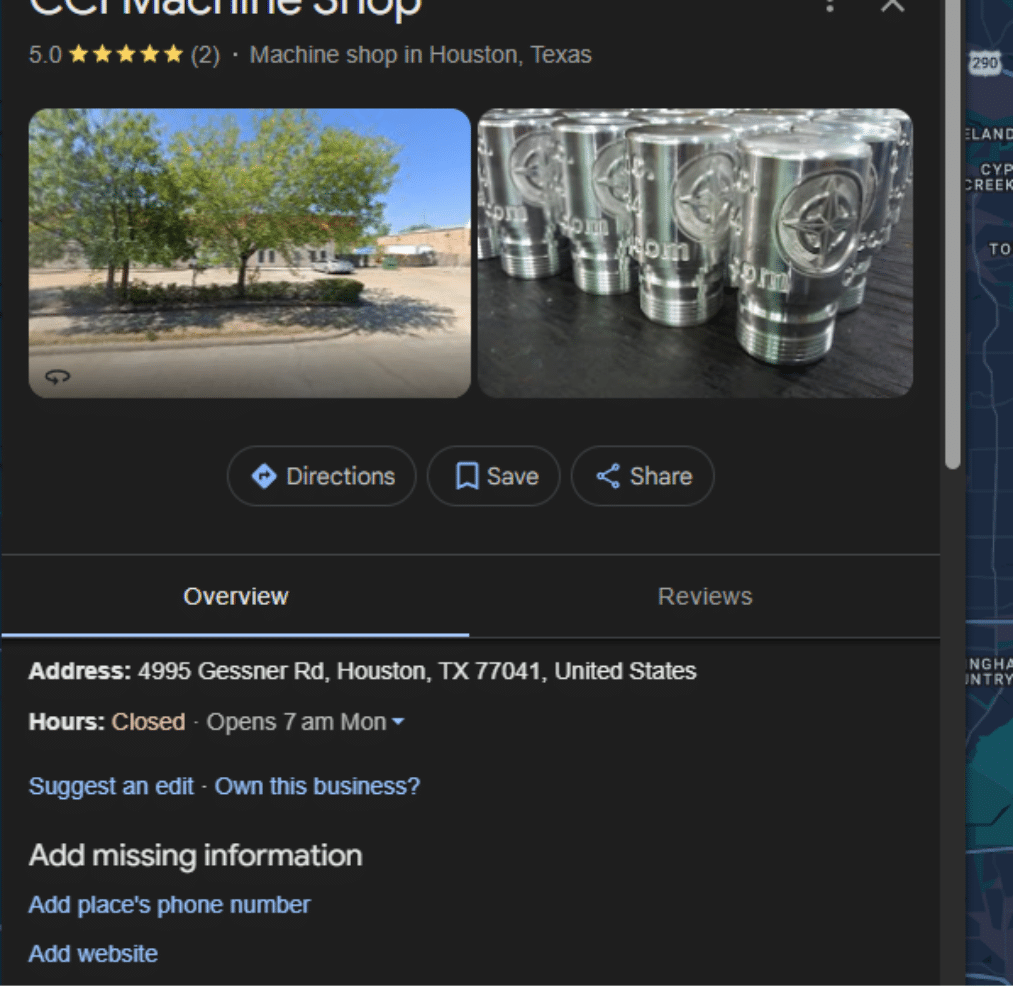
Mistake #1: An Incomplete Google Business Profile
Your Google Business Profile (GBP) is not just a listing it’s your first impression in local search results. For a CNC machine shop, a thin profile means lost visibility in the Local Pack, which is the three-result box Google shows before any organic results.
What most shops are missing from their GBP:
- Detailed services list (5-axis, turning, EDM, Swiss screw, etc.)
- Machinery and equipment inventory
- Industry certifications (AS9100, ISO 9001, ITAR)
- Typical lead times and response time signals
- Industry specialties (aerospace, medical, automotive, oil and gas)
A fully optimized GBP signals to Google exactly what you do and who you serve which is how you end up in front of procurement managers who need you, not random consumer searches you’ll never convert.
Mistake 2: No Location-Specific Content On Your Website
A generic “About Us” page will not rank for “CNC machine shop in [your city].” Google needs explicit location and service signals baked into your site’s content architecture to associate your business with a specific geography.
What works for CNC machine shop SEO at the local level:
- Dedicated city + service pages (e.g., “CNC Machining Services in Houston, TX”)
- Capability pages that name your equipment, tolerances, and materials served
- Industry-specific landing pages targeting procurement queries by vertical
- Case studies showing local or regional work with measurable outcomes
This is not about stuffing city names into paragraphs it’s about building page-level topical relevance around how buyers in your region search for precision machining services. Our manufacturing SEO approach starts here before anything else.
Mistake #3: Ignoring B2B Industrial Directories
Procurement managers don’t only search Google. Platforms like ThomasNet, Kompass, IndustryNet, and MFG.com are where qualified industrial buyers actually go when sourcing suppliers. Being absent from these directories means missing a layer of local industrial search that operates entirely outside of Google.
There’s also a secondary benefit: citations in reputable B2B manufacturing directories strengthen your domain authority and local SEO signals. Google sees your business listed consistently across trusted industry platforms and treats it as a stronger relevance signal for local manufacturing queries.
The shops winning the most RFQ traffic in competitive cities typically have both a strong Google footprint and an active directory presence. It’s not one or the other.
Mistake #4: Inconsistent NAP Across The web
NAP stands for Name, Address, and Phone number. If these three pieces of information appear differently across your website, Google Business Profile, directories, and citations — even minor differences like “St.” versus “Street” or a missing suite number Google’s local algorithm loses trust in your business’s location data and deprioritizes you in local results.
This is one of the most overlooked local SEO issues we audit at Rankvi. It’s invisible to the shop owner, but it’s actively suppressing rankings. A full NAP audit across all listings is one of the first corrective steps in our local SEO for manufacturers process.
One of the shops we audited had four different phone numbers across their website, GMB, ThomasNet, and a legacy Yelp listing. Their local pack rankings recovered within 6 weeks of NAP normalization alone.
What Actually Moves The Needle For CNC Shop Local Rankings
Fixing local SEO for a B2B machine shop is a structured process, not a checklist you run once. The four levers that consistently produce results:
01
GBP optimization
Technical capabilities, certifications, machinery, and industry specialties fully documented
02
City + service pages
Location-specific landing pages built around real procurement search queries in your region
03
B2B citation building
Consistent presence across ThomasNet, Kompass, IndustryNet, and other industrial directories
04
Procurement reviews
Reviews from engineers and buyers — not consumers — that speak to quality, lead times, and capability
Shops that execute all four consistently capture the majority of “near me” and city-based B2B machining searches in their region — searches that convert directly into RFQs and contract calls.
The Results When Local SEO Is Treated As A Revenue Channel
Local search isn’t a vanity metric for machine shops it’s a direct pipeline to contract revenue. When a procurement manager searches for capability in your city and finds your competitor instead of you, that isn’t a missed click. It’s a missed contract, often worth five or six figures.
The shops that treat their digital presence with the same rigor they apply to their QMS or machine maintenance are the ones filling their RFQ queue from organic search consistently, without ad spend.