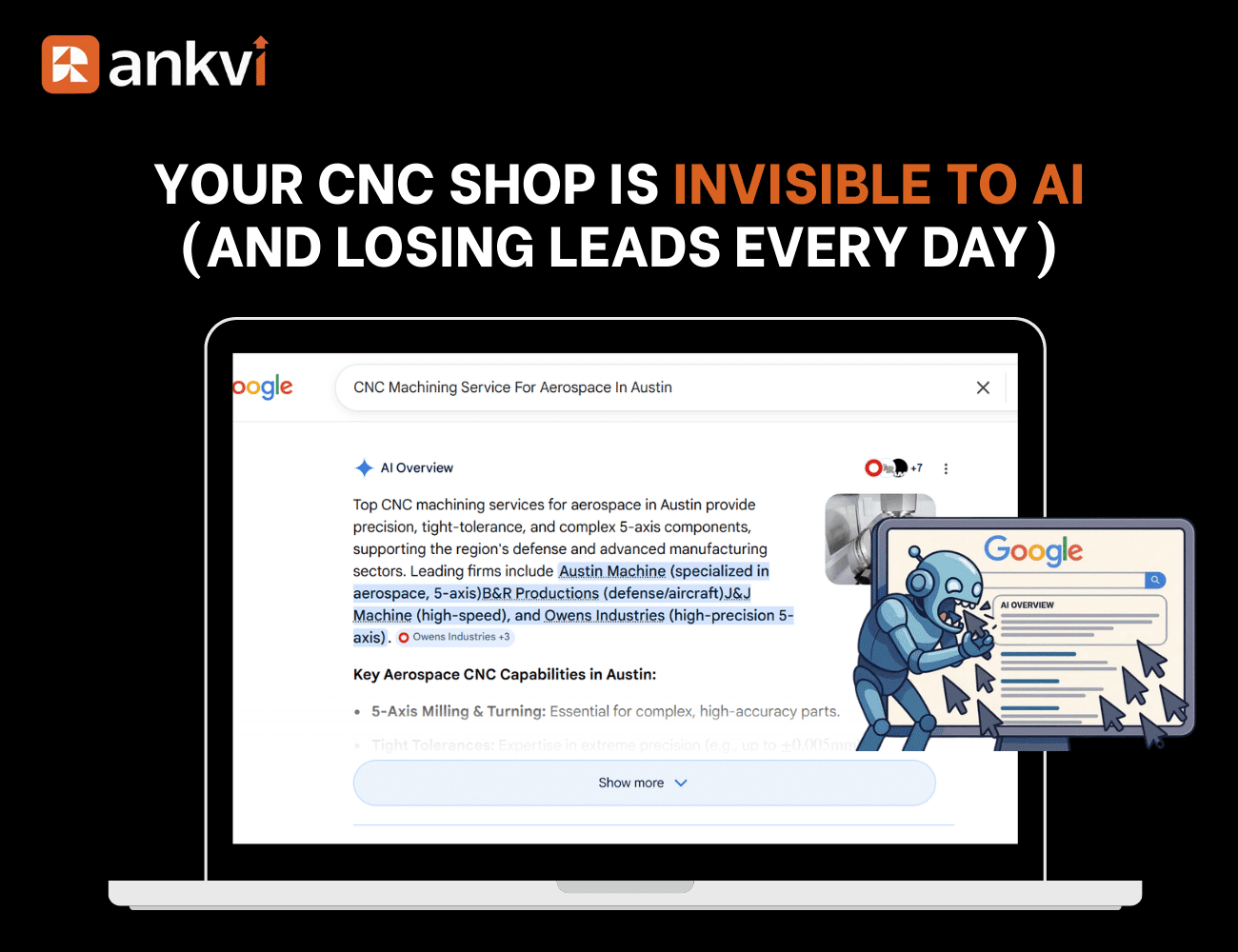
Last week, a procurement engineer at 2 AM searched “precision CNC shop for aerospace brackets near me.” ChatGPT gave them three recommendations. You weren’t one of them.
Not because your shop can’t handle the job. Not because your tolerances aren’t tight enough. But because when AI scraped your website, it found another generic “overview” that said nothing.
The Brutal Truth: AI Doesn’t Read Your “About Us” Page
Here’s what’s actually happening right now:
A design engineer has a problem. They need someone who can hold ±0.0005″ on 17-4 stainless. It’s 11 PM. Their prototype deadline is Thursday.
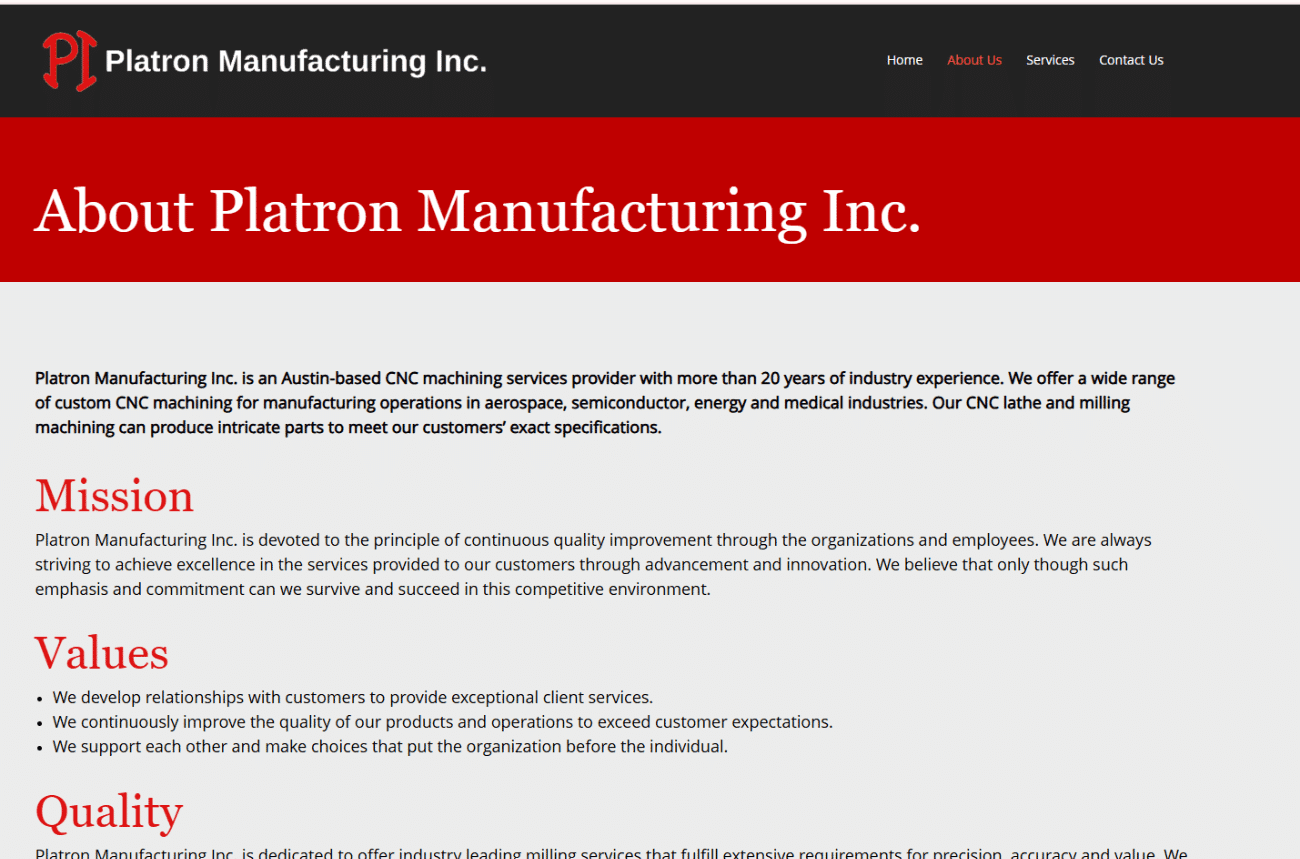
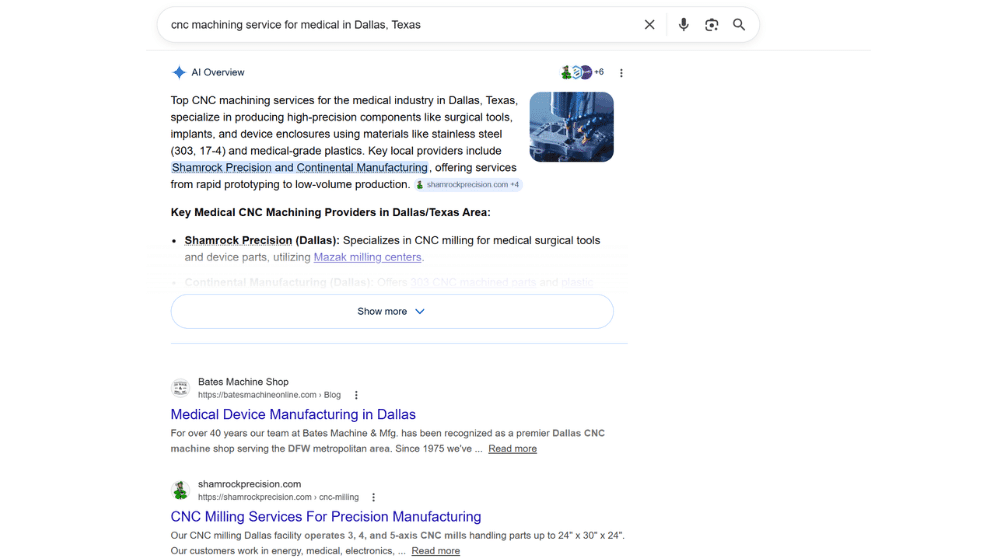
They don’t open Google and click through ten blue links anymore. They ask ChatGPT, Perplexity, or Google’s AI Overview: “Which CNC shops near [city] can machine 17-4 stainless steel with submicron tolerances and fast turnaround?”
The AI reads 47 machine shop websites in 0.3 seconds.
Yours says: “Leading provider of precision manufacturing solutions with state-of-the-art equipment and commitment to quality.”
Your competitor’s says: “We run 17-4 PH stainless daily on our Haas VF-4SS with flood coolant systems. Typical tolerance: ±0.0002″. Medical and aerospace parts shipped within 72 hours. Here’s why 17-4 work-hardens and how we compensate…”
Guess who gets the call?
Why “SEO-Optimized Content” Is Now Killing Your Business
You paid someone to write “SEO content.” They gave you 2,000 words about “precision manufacturing excellence” and “industry-leading capabilities.”
That worked in 2019 when Google rewarded keyword density.
In 2025, AI doesn’t care about your keywords. It cares about whether you actually answer the question.
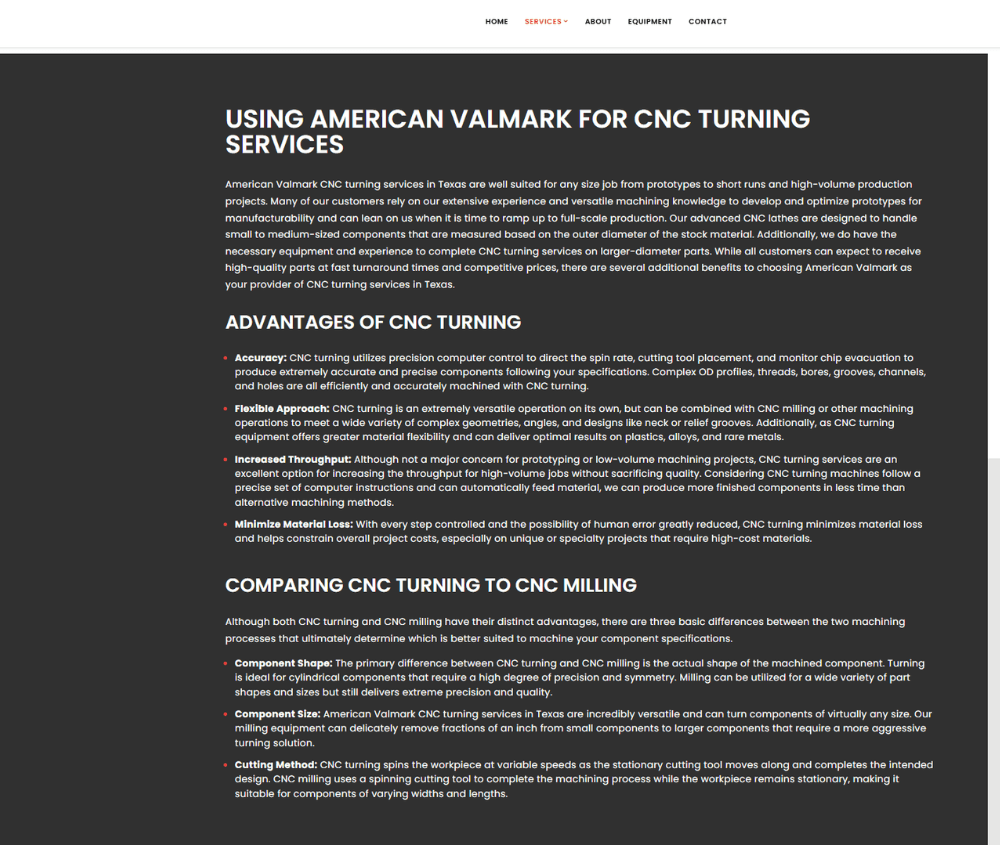
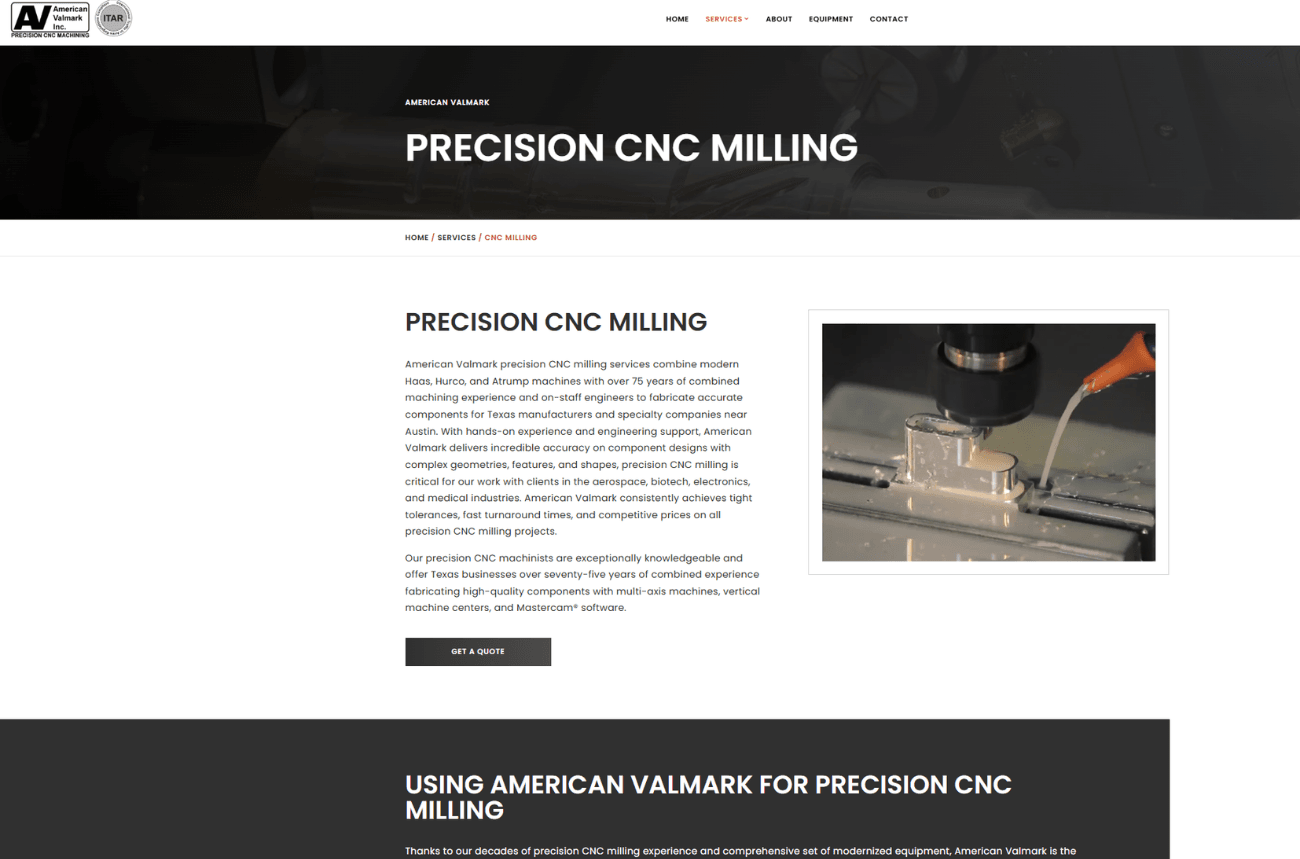
The Old Way (That Stopped Working):
- Keyword: "CNC machining services" (47 times)
- Headers Only: "Our CNC Machining Services," "Why Choose Our CNC Services"
- Content: Generic descriptions of what CNC machining "Milling" "Turning" is
- Solution: Not providing the solution to the engineers
- Goal: Rank on page 1 of Google
The New Reality:
- AI reads for substance, not keywords
- Engineers ask specific questions
- AI recommends shops that demonstrate actual expertise
- You either answer the 2 AM question, or you're invisible
What Engineers Are Actually Asking (And You’re Not Answering)
Pull your website up right now. Can you find clear answers to these questions that actual buyers are asking AI?
“Can any shop near me handle Inconel 718?”
- Your site: “We work with exotic materials”
- Winning answer: “Yes. Inconel 718 machines at 40 SFM with carbide inserts, ceramic for roughing. We run it weekly for turbine components. Expect 3x tool wear vs. stainless. Here’s our coolant strategy…”
“What’s the realistic tolerance for deep hole drilling?”
- Your site: “Tight tolerances available”
- Winning answer: “Length-to-diameter ratio matters. Under 10:1, we hold ±0.002″. Above 20:1, expect ±0.005″ with gun drilling. We have a 40:1 depth capacity. Here’s when to use gun drill vs. deep-hole boring…”
“Who can reverse-engineer this broken part by Friday?”
- Your site: “Fast turnaround times”
- Winning answer: “Bring it Tuesday before 2 PM. We’ll CMM scan, CAD model by Wednesday noon, prototype by Thursday EOD. Rush fee: $400. Here’s our reverse-engineering process…”
See the difference? One talks about capabilities. The other solves the problem.
The Content That Actually Shows Up in AI Answers
I analyzed 200 ChatGPT responses to manufacturing queries. The shops that got recommended did these things:
1. They Answer the Specific Question
Not “we offer CNC milling services.”
Instead: “How to prevent chatter when milling thin-wall aluminum aerospace parts (0.040″ walls)”
Then they explain: feed rates, toolpath strategies, fixturing, what goes wrong, how they solve it.
2. They Show Their Constraints (Honestly)
“Our largest bed is 40″ × 20″. For bigger parts, we’ll refer you to [Shop Name] – they run 5-axis up to 60″.”
AI loves this. Because it’s helpful. It’s human. It’s what a real machinist would tell another machinist.
3. They Write Like They’re Talking to Someone Who Knows
No more “CNC stands for Computer Numerical Control.”
Engineers know what CNC means. They want to know if you can hold perpendicularity on a 4-axis setup. Talk to them like peers.
4. They Embed Answers in Natural Language
Not a blog titled “CNC machining services provider near Dallas, Texas, aerospace.”
Instead: “When aerospace engineers call us about aluminum 7075 parts” – then the article answers what they actually ask about 7075.
The “2 AM Engineer” Test for Your Content
Open any page on your site. Ask yourself:
“If an engineer with a specific problem reads this at 2 AM, do they get their answer in 30 seconds?”
If the answer is “no” or “maybe” or “they’d have to call us,” you’re losing to AI-optimized competitors.
Examples That Pass the Test:
Fails: “We provide comprehensive turning services”
Passes: “Our Swiss-type lathes handle 0.125″ to 1.25″ bar stock. Best for high-volume (500+) parts under 6″ long. Single-setup complete parts in one operation.”
Fails: “Quality assurance is our priority”
Passes: “Every part gets CMM inspection. You receive a PDF inspection report with your shipment. Out-of-tolerance parts are remade free within 24 hours.”
Fails: “Contact us for a quote”
Passes: “Typical quote turnaround: 4 hours for standard parts, 24 hours for complex 5-axis. Upload your STEP file here, or email shop@[yourcompany].com if it’s over 50MB.”
How To Fix This (If You Have Time To Do It Yourself)
You don’t need to rewrite your entire website this week. Start here:
Week 1: Answer One Real Question
Think about the last three quote requests you got. What did they ask? Write 500 words answering that exact question.
Example: Customer called asking if you can anodize after machining?
Write: “Yes, Here’s Our Machine-Then-Anodize Process for Aluminum Parts”
Explain your typical timeline, who you use for anodizing, color options, how it affects tolerances. Be specific. Be honest.
Week 2: Document One Process
Walk through your shop. Pick one thing you do differently or really well.
- “How we fixture thin-wall parts to prevent distortion”
- “Our 5-step process for emergency prototype quotes”
- “Why we pre-heat tool steel before machining (and when we don’t)”
Write it like you’re training a new machinist. Include the mistakes people make. AI eats this up.
Week 3: List Your Actual Constraints
Create a page: “What We Can (And Can’t) Do”
- Maximum part size
- Materials you run regularly vs. occasionally vs. won’t touch
- Minimum order quantities
- Lead times (realistic ones)
- When you refer work elsewhere
This isn’t hurting your business. It’s qualifying better leads. The engineer who needs 100,000 tiny plastic parts won’t waste your time quoting when you clearly state you’re a metal shop with 50-piece minimums.
How To Fix This (If You Have Time To Do It Yourself)
Somewhere right now, your ideal customer is asking Gemini, ChatGPT or Perplexity:
- CNC shops that understand medical device regulations near [your city]
- Who can machine carbon fiber without delamination?
- Machine shops with in-house CMM inspection and AS9100
- Best shop for low-volume titanium prototype parts
If your website doesn’t directly answer these questions in plain language, AI is recommending someone else.
Not because they’re better machinists.
Because they sound like they know what they’re talking about.
Stop Writing For Google. Start Writing For The Engineer.
Here’s the shift:
Old approach: “How do I rank for ‘precision CNC machining services’?”
New approach: “What would I tell an engineer who called asking about this specific problem?”
Then write exactly that. With specifics. With numbers. With honest limitations.
The keywords will take care of themselves. Because when you answer real questions with real expertise, you naturally use the language your customers use.
Your Next Step (Takes 20 Minutes)
- Open a Google Doc
- Write down the last technical question a customer asked you
- Answer it. Like you're talking to them. With specifics.
- Put that answer on your website
- Title it with the question (exactly how they asked it)
That’s it. That’s your first AI-optimized content.
Next week, do it again with a different question.
In three months, you’ll have 12 pieces of content that actually answer what engineers are asking. And when AI scrapes your site, it’ll find substance instead of fluff.
Your competitors are still writing “overviews of their comprehensive capabilities.”
You’re going to answer the questions.
Guess who shows up when the next engineer asks AI for help?
Is Your CNC Shop Invisible? To AI
Take the 2-minute test: Ask ChatGPT, “best CNC shop for [your specialty] in [your city]” are you in the answer? If not, we should talk.